Spray Foam Insulation Anchorage: The Complete Alaska Homeowner's Guide
Alaska’s extreme climate puts unique demands on home insulation that most Lower 48 building standards simply don’t address. With winter temperatures regularly dropping below zero and annual heating costs ranging from $2,800 in Anchorage to over $8,000 in remote communities, the insulation choices you make directly impact your comfort and your wallet.
Whether you’re building a new home, retrofitting an older property, or simply tired of drafty rooms and sky-high heating bills, spray foam insulation offers a proven solution for Alaska’s challenging environment.
Anchorage Insulation Quick Facts
Why Spray Foam Insulation is Essential for Alaska Homes
Alaska’s Unique Climate Challenges
Anchorage experiences temperature swings that would stress any building envelope. Typical annual temperatures range from -8°F in the coldest winter stretches to around 68°F in summer. According to the National Weather Service, Anchorage averages 10,000-11,000 heating degree days annually—more than double what most American cities experience.
Most of Alaska falls into Climate Zone 7 under the International Energy Conservation Code (IECC), with the coldest boroughs classified as Zone 8. These zones require the highest insulation R-values in the country.
The subarctic climate also creates unique moisture challenges. When warm, humid indoor air meets cold surfaces inside wall cavities, condensation forms—a recipe for mold, rot, and structural damage.
The Hidden Cost of Poor Insulation
Studies show that up to 40% of a building’s total energy loss occurs through air infiltration—not through the insulation material itself, but through gaps, cracks, and thermal bypasses in the building envelope.
The Alaska Housing Finance Corporation reports that homes properly retrofitted with insulation and air sealing improvements see average energy savings of 30% or more. For an Anchorage home spending $2,800 annually on heating, that translates to $840 or more in yearly savings.
Why Air Sealing Matters
Unlike fiberglass batts or blown-in cellulose, spray foam expands upon application to fill every gap, crack, and crevice. It creates both an insulation layer and a complete air barrier in one application.
Open Cell vs Closed Cell Spray Foam: Which is Best for Alaska?
Understanding the differences between open cell and closed cell spray foam is essential for making the right choice for your Alaska home.
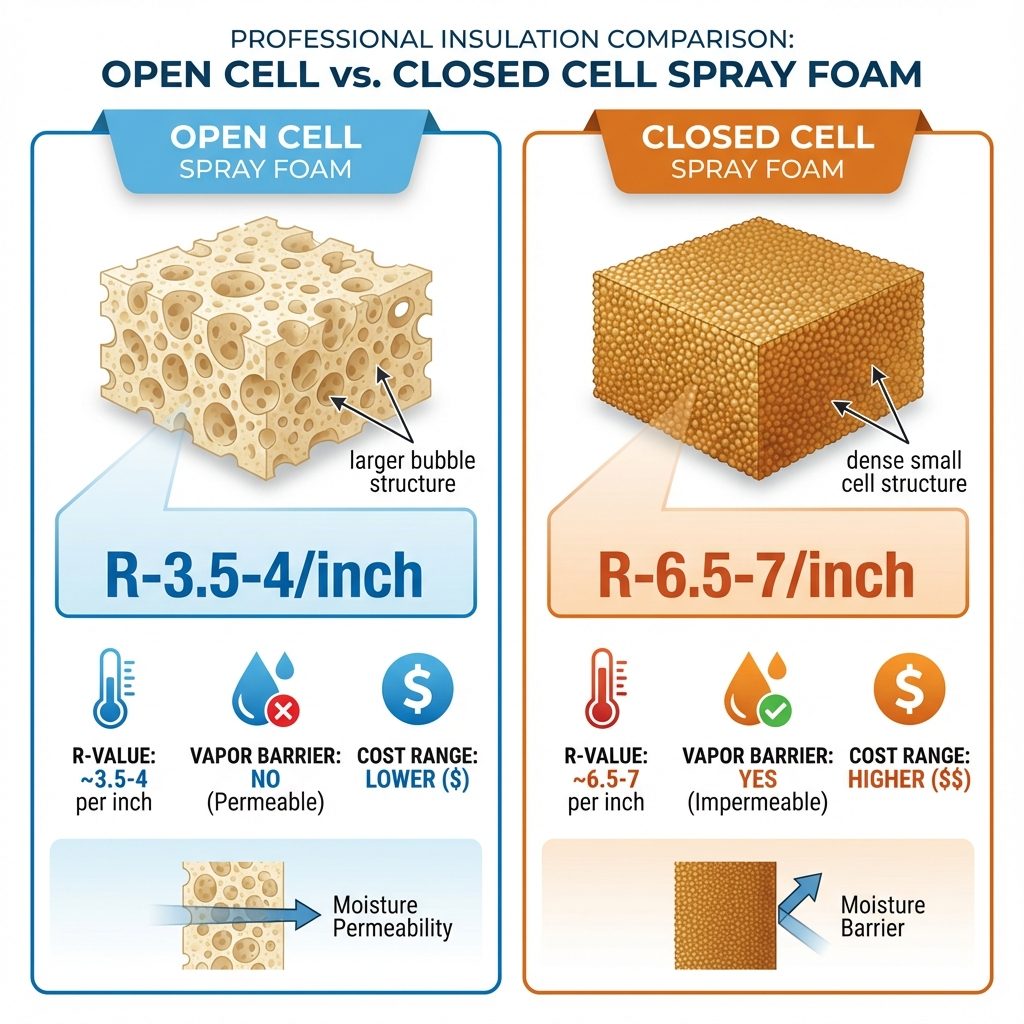
Understanding Closed Cell Spray Foam
Closed cell spray foam is the premium choice for cold climate applications. Its densely packed, completely closed cellular structure delivers R-6.5 to R-7 per inch—nearly double the insulating value of fiberglass.
Key advantages for Alaska homes:
- Vapor Barrier Properties: At thicknesses greater than 1.5 inches, closed cell foam acts as a Class II vapor retarder
- Structural Strengthening: Adds rigidity to walls and roofs for snow loads and wind
- Water Resistance: Essentially waterproof and doesn’t support mold growth
The Alaska Recommendation: Closed Cell
For exterior applications in Alaska—including walls, attics, crawl spaces, and foundations—closed cell spray foam is strongly recommended.
| Feature | Closed Cell | Open Cell |
|---|---|---|
| R-value per inch | R-6.5 to R-7 | R-3.5 to R-4 |
| Vapor barrier | Yes (>1.5”) | No |
| Moisture resistance | Excellent | Poor |
| Cost per board foot | $1.20-$1.80 | $0.70-$1.10 |
| Alaska recommendation | Yes - exterior | Limited interior use |
How Spray Foam Prevents Ice Dams in Alaska
Ice dams cause thousands of dollars in damage to Alaska homes every winter. Understanding how they form—and how spray foam prevents them—can save you from costly repairs.
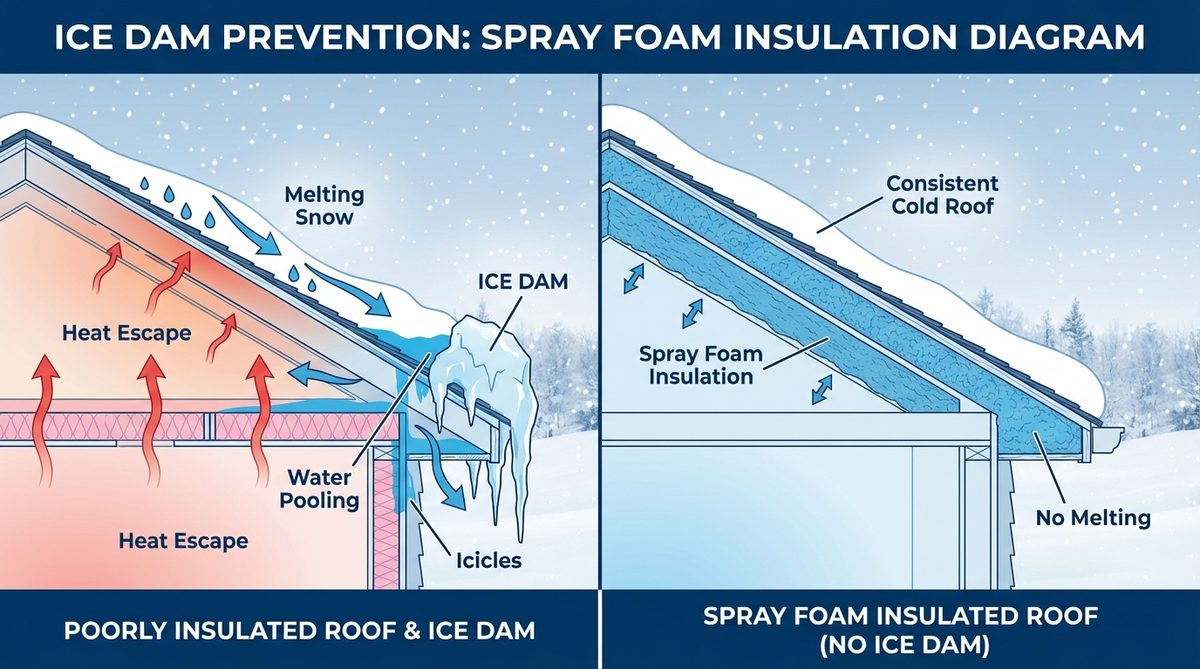
The Ice Dam Problem
Ice dams form when heat escapes through a poorly insulated attic, warming the roof deck above. Snow melts on the warm section, and water runs down toward the cold eaves where it refreezes, creating a dam that backs water up under shingles.
The Spray Foam Solution
Spray foam insulation attacks the ice dam problem at its source. When properly applied, closed cell spray foam creates a monolithic air barrier that eliminates the heat loss causing ice dams. Combined with R-49 or higher insulation values, this stops the chain of events that leads to ice dams.
Spray Foam Insulation Cost in Anchorage: 2025 Pricing Guide
Understanding spray foam costs helps you budget effectively and evaluate the true value of your investment.
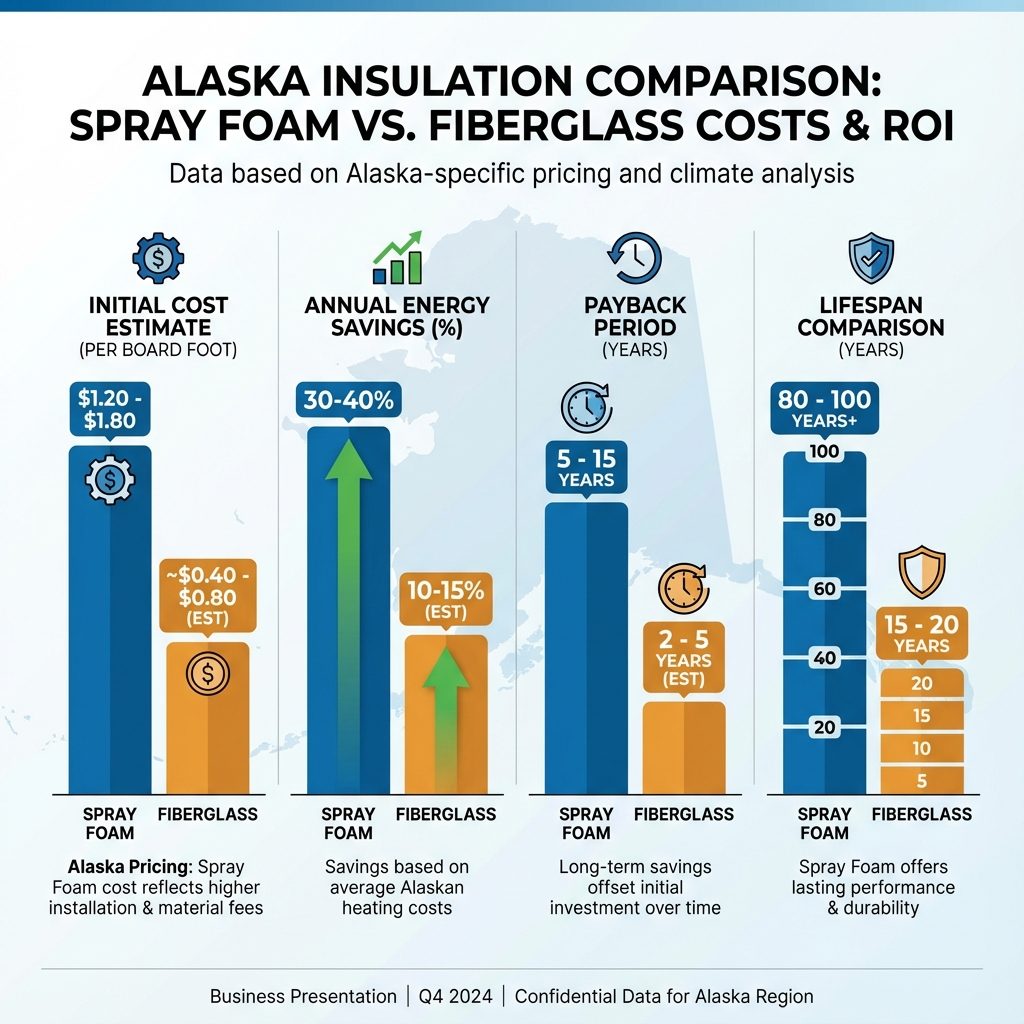
Current Anchorage Pricing
Based on current market rates in the Anchorage area:
- Closed Cell Spray Foam: $1.20-$1.80 per board foot
- Open Cell Spray Foam: $0.70-$1.10 per board foot
- 1,000 sq ft project (3” closed cell): $2,200-$5,500
- Whole-house projects: $7,000-$15,000+
True Cost Comparison: Spray Foam vs Fiberglass
| Factor | Spray Foam | Fiberglass |
|---|---|---|
| Initial cost | $$ - $$$ | $ |
| Lifespan | 80-100 years | 15-20 years |
| Energy savings | 30-40% | 10-15% |
| Air sealing | Yes | No |
| Maintenance | None | Periodic replacement |
Alaska Energy Rebates and Tax Credits for Spray Foam
There’s never been a better time to upgrade your insulation. Federal programs have allocated unprecedented funding for home energy efficiency in Alaska.
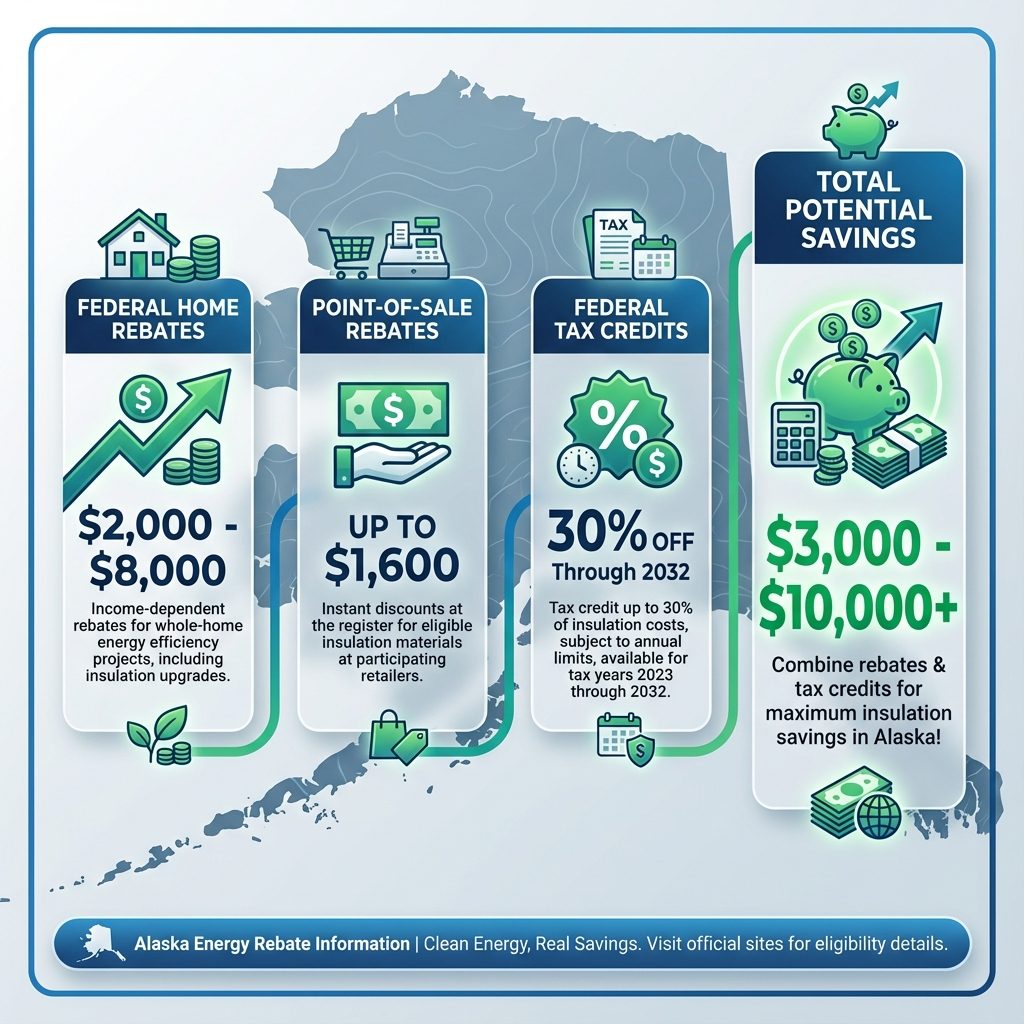
Federal HOME Efficiency Rebates
The Department of Energy has allocated $74 million to Alaska for Home Efficiency Rebates:
- 20-35% energy savings: Up to $2,000 rebate (50% of project cost)
- 35%+ energy savings: Up to $4,000 rebate (50% of project cost)
- Low/moderate income households: Double the rebates (up to $8,000)
Point-of-Sale Rebates (HEEHRA)
- Up to $1,600 for insulation and air sealing
- 100% coverage for households under 80% Area Median Income
- 50% coverage for households under 150% AMI
Federal Tax Credits
The Inflation Reduction Act provides:
- Up to $1,200 annually for insulation improvements
- 30% of project cost through 2032
- Can be combined with rebates for maximum savings
To access these programs, contact AHFC at 1-877-AKRebate (1-877-257-3228).
Alaska Building Codes and Insulation Requirements
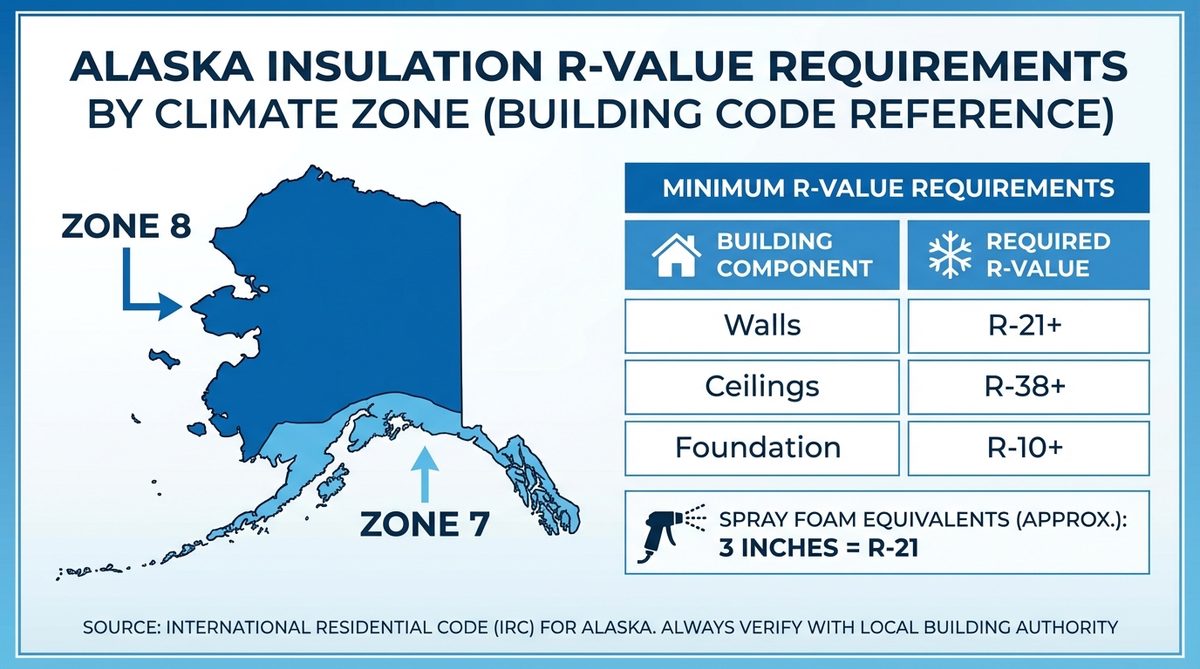
Minimum Insulation Requirements
The Alaska Building Energy Efficiency Standard (BEES) establishes:
- Walls: R-21 minimum
- Ceilings: R-38 minimum
- Foundations and rim boards: R-10 minimum
- Minimum 5-Star energy rating required
Meeting Code with Spray Foam
- 3 inches of closed cell = R-21 (meets wall minimum)
- 6 inches of closed cell = R-42 (exceeds ceiling minimum)
- 8 inches of closed cell = R-56 (approaches attic recommendations)
Frequently Asked Questions
Is spray foam insulation suitable for Alaska’s extreme cold?
Yes, spray foam insulation is specifically designed to perform in extreme cold conditions. Closed cell spray foam maintains its R-value and structural integrity even at -40°F or colder.
How much does spray foam insulation cost in Anchorage?
Closed cell spray foam typically costs $1.20-$1.80 per board foot installed. For a typical 1,000 square foot area with 3 inches of closed cell foam, expect to pay $2,200-$5,500.
Which type of spray foam is best for Alaska homes?
Closed cell spray foam is strongly recommended for all exterior applications in Alaska homes. Its higher R-value per inch, vapor barrier properties, and moisture resistance make it the clear choice.
Will spray foam reduce my heating bills?
Yes, homeowners typically see 30-40% reduction in heating costs after spray foam installation. For an Anchorage home spending $2,800 annually on heating, that translates to $840 or more in yearly savings.
How long does spray foam insulation last?
Spray foam insulation lasts 80-100 years with proper installation—essentially the lifetime of most homes. Unlike fiberglass which can sag and settle, spray foam maintains its performance permanently.
Does spray foam prevent ice dams?
Yes, spray foam is one of the most effective solutions for preventing ice dams. When properly applied with adequate R-value (R-49+), it addresses both insulation and air sealing needed to prevent ice dam formation.
Are there rebates for spray foam insulation in Alaska?
Yes, significant rebates are available. Federal HOME Efficiency Rebates offer $2,000-$8,000 depending on energy savings achieved. Point-of-sale rebates provide up to $1,600. Federal tax credits offer up to $1,200 annually.
Service Areas
Foamology Insulation proudly serves homeowners throughout the Anchorage metropolitan area and surrounding communities:
- Anchorage
- Eagle River
- Chugiak
- Girdwood
- Wasilla
- Palmer
- Mat-Su Valley
Get Your Free Estimate Today
Ready to improve your home's comfort and energy efficiency? With federal rebates up to $8,000 and tax credits providing additional savings, there's never been a better time to upgrade your home's insulation.
This article was prepared using research from authoritative sources including the Alaska Housing Finance Corporation, U.S. Department of Energy, Environmental Protection Agency, Cold Climate Housing Research Center, and the Spray Polyurethane Foam Alliance.