Spray Foam Insulation: Is It Worth the Cost?
Quick Answer
Is spray foam insulation worth the higher upfront cost? The short answer is yes—for most homeowners who plan to stay in their homes for five years or more. While spray foam costs 2-8 times more than traditional fiberglass insulation, it delivers 30-50% energy savings, pays for itself in 3-7 years, and lasts 80-100 years. That’s a lifetime of returns on a one-time investment.
Key Statistics at a Glance
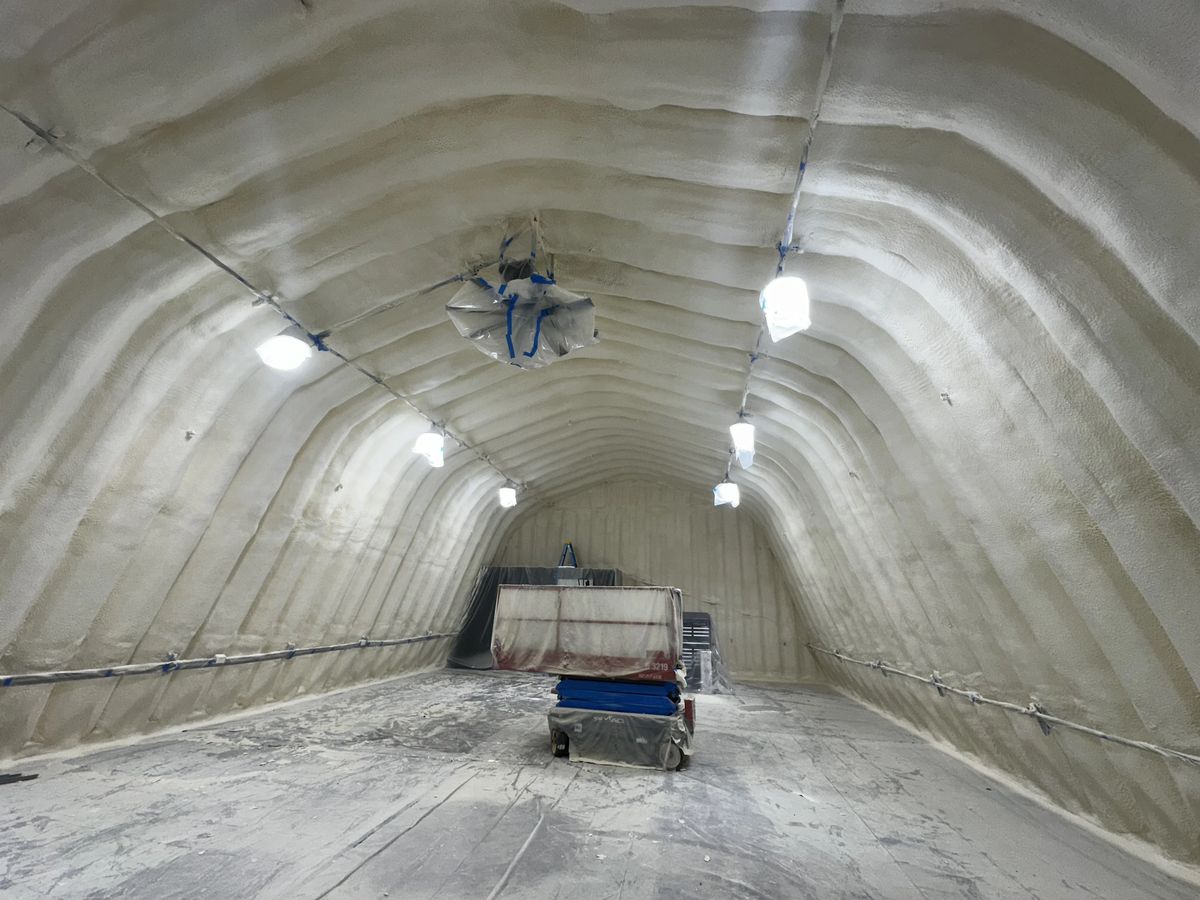
Professional spray foam installation requires specialized equipment and certified contractors for optimal performance and safety.
But spray foam isn’t the right choice for every situation. If you’re selling your home soon, have a tight budget, or just need to insulate a small area, traditional insulation might make more financial sense.
In this comprehensive guide, we’ll break down the real costs of spray foam insulation in 2025, calculate your potential return on investment, compare it to alternatives like fiberglass, and help you decide whether spray foam is worth it for your specific situation.
What Is Spray Foam Insulation and How Does It Work?
Spray foam insulation is a two-component chemical mixture that expands dramatically upon application, filling every gap, crack, and crevice in your walls, attic, or crawl space. Unlike traditional insulation that comes in pre-cut batts or loose fill, spray foam is applied as a liquid that expands up to 150 times its original volume, creating a continuous thermal and air barrier.
The two components—isocyanates and polyol resin—are mixed at the spray gun and react immediately upon contact with surfaces. This chemical reaction generates heat and causes the rapid expansion that makes spray foam so effective at sealing irregular spaces and hard-to-reach areas.
According to the U.S. Department of Energy, spray foam insulation requires specialized equipment and certified installers due to the chemical handling involved. This isn’t a DIY project for most homeowners—professional installation ensures proper mixing ratios, safety protocols, and optimal performance.
Open-Cell vs Closed-Cell Spray Foam
There are two types of spray foam insulation, each with distinct characteristics and best-use applications:
| Feature | Open-Cell | Closed-Cell |
|---|---|---|
| R-Value per Inch | R-3.5 to R-3.7 | R-6.0 to R-7.0 |
| Cost per Sq Ft | $1.00 - $3.00 | $1.50 - $4.50 |
| Density | 0.5 lbs/cu ft | 1.75+ lbs/cu ft |
| Expansion Rate | 150x liquid volume | 50x liquid volume |
| Vapor Barrier | No (breathable) | Yes (moisture resistant) |
| Best Applications | Interior walls, soundproofing | Attics, crawl spaces, basements |
| Structural Benefit | Minimal | Significant (adds rigidity) |
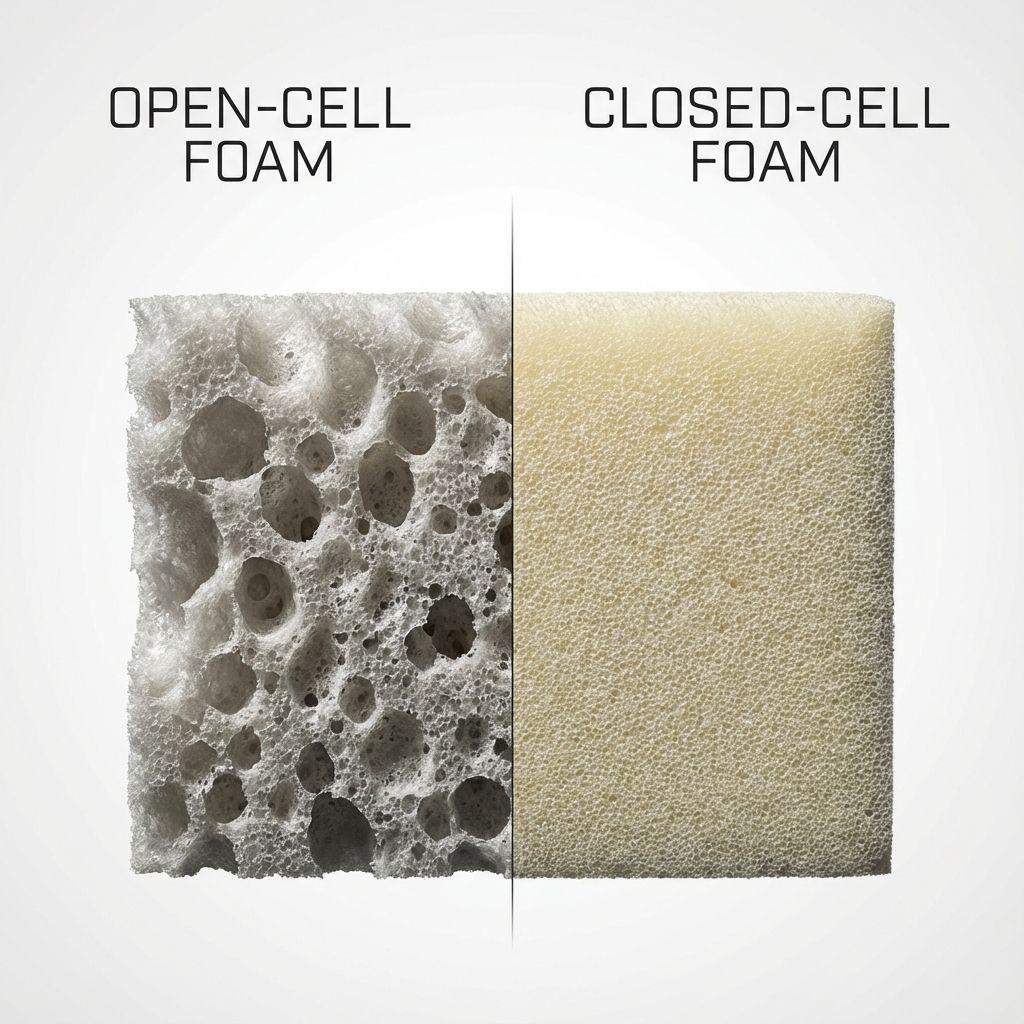
The visible difference between open-cell (left) and closed-cell (right) spray foam. Closed-cell foam’s denser structure provides higher R-value and moisture resistance.
Pro Tip: Choosing the Right Foam
Open-cell foam is softer, less dense, and more affordable—excellent for soundproofing and interior applications where moisture isn’t a concern.
Closed-cell foam is denser, stronger, and provides nearly double the R-value per inch. It acts as its own vapor barrier and adds structural strength. Research from the National Association of Home Builders shows walls with closed-cell spray foam have racking strength up to 300% greater than walls without it.
Spray Foam Insulation Cost: 2026 Price Guide
Understanding spray foam costs helps you evaluate the investment and calculate your potential return. According to Angi’s 2025 cost data, spray foam insulation costs significantly more upfront than traditional insulation—but the long-term savings often justify the premium.
Cost Per Square Foot by Foam Type
| Foam Type | Cost Per Sq Ft | R-Value Per Inch | Best For |
|---|---|---|---|
| Open-Cell | $1.00 - $3.00 | R-3.5 to R-3.7 | Interior walls, soundproofing |
| Closed-Cell | $1.50 - $4.50 | R-6.0 to R-7.0 | Attics, crawl spaces, moisture |
| DIY Kits | $300 - $600 (per kit) | Varies | Small gaps, rim joists only |
The average spray foam project costs between $1,453 and $4,335, with most homeowners paying around $2,885. However, whole-house projects can easily exceed $8,000 depending on home size and foam type selected.
Cost by Project Type
Attic Insulation: $3,500 - $7,000
- Open-cell attic: $3,500 - $5,000
- Closed-cell attic: $4,500 - $7,000
- Includes roof deck application for conditioned attic space
Whole House (2,000 sq ft): $4,000 - $8,000+
- New construction: $1 - $4 per square foot
- Existing homes: $3 - $5 per square foot (higher due to access challenges)
Crawl Space: $2,000 - $4,000
- Includes wall insulation and encapsulation
- Moisture control benefits add value
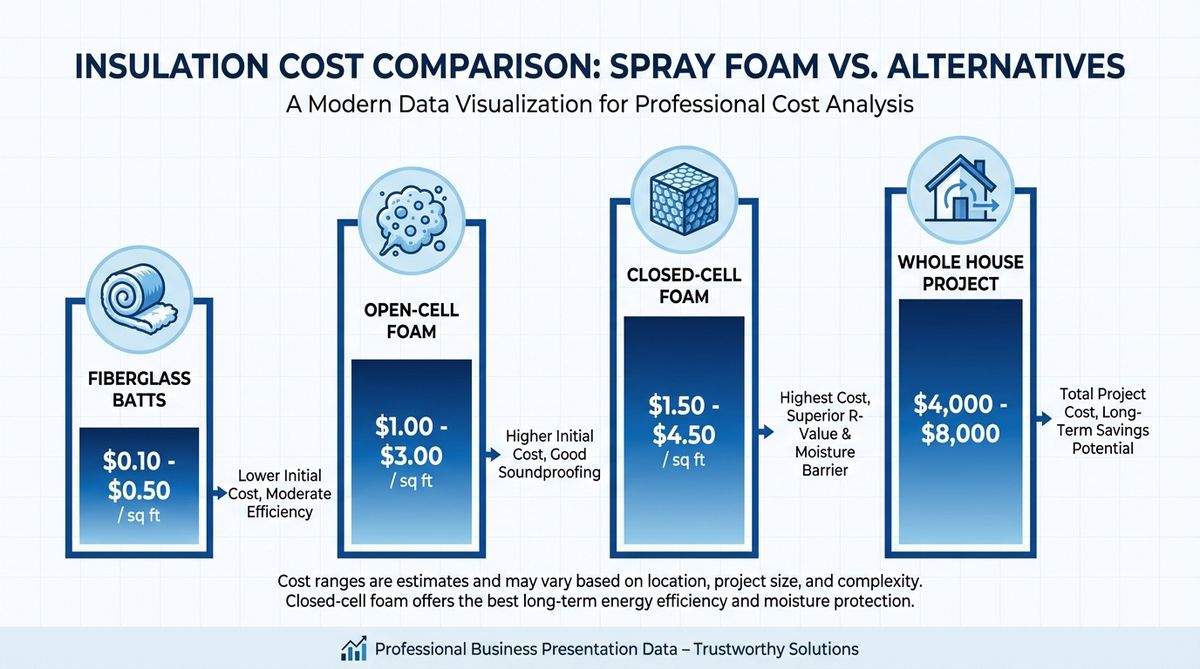
Spray foam costs 2-8 times more than traditional fiberglass, but delivers superior performance and long-term savings.
Why Is Spray Foam More Expensive?
According to Consumer Reports, installation costs run 100-300% higher than traditional insulation:
- Specialized Equipment: Heated hoses, proportioners, and spray guns costing $10,000+
- Professional Installation: Chemical handling requires trained, certified installers
- High-Quality Materials: Isocyanates and polyol resins are more expensive than fiberglass
- Labor-Intensive Process: Proper application takes skill and time
- Superior Performance: You’re paying for dramatically better results
Spray Foam Insulation ROI: Your 3-7 Year Payback Period
The real value of spray foam insulation becomes clear when you calculate the return on investment. According to research from Compass Foam, homeowners who install spray foam can expect a payback period of 3-7 years through energy savings alone.
Energy Savings Breakdown
- 30-50% reduction in heating and cooling costs
- $300 - $1,000 annual savings for typical homes
- $15,000 - $50,000 lifetime savings over 80+ year lifespan
- 20-40% better performance than fiberglass at equal R-values
The EPA’s Energy Star program notes that combining proper insulation with weatherization services can save up to 20% on monthly energy bills. Spray foam provides both in a single application.
Sample ROI Calculation
- Current monthly energy bill: $300
- Expected savings with spray foam: 40%
- Monthly savings: $120
- Annual savings: $1,440
- Spray foam investment: $5,000
- Payback period: 3.5 years
After the payback period, you continue saving $1,440+ per year for the life of your home. Over 10 years, that’s $14,400 in savings. Over 20 years: $28,800.
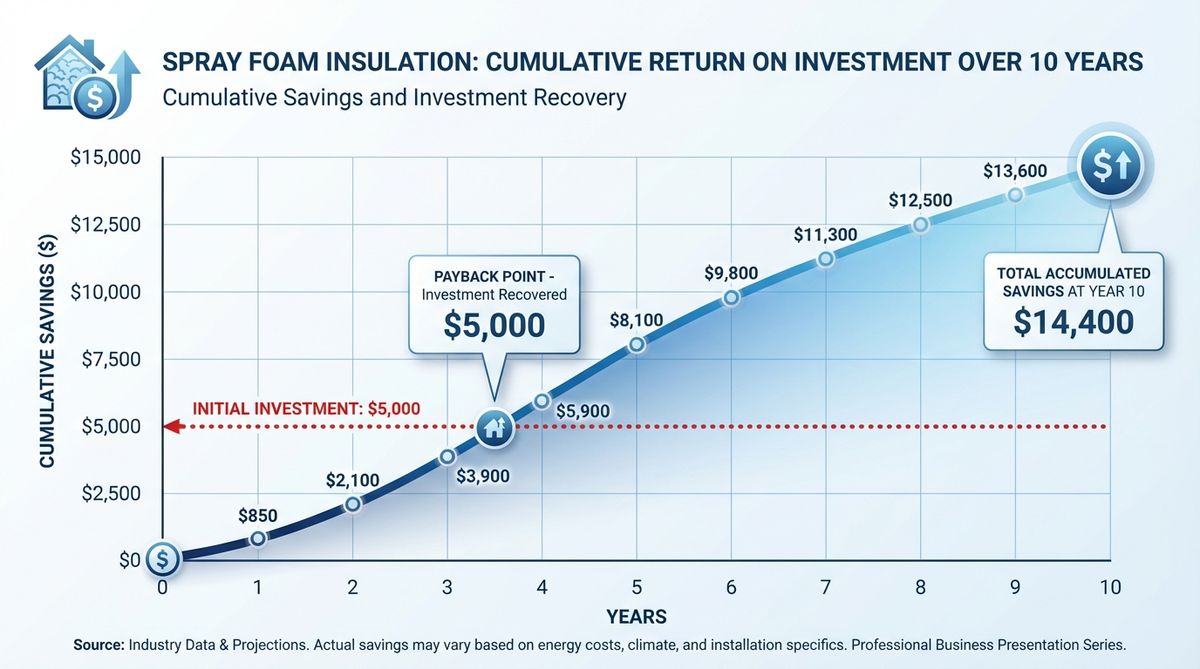
Most homeowners recover their spray foam investment in 3-7 years, then continue saving $1,000+ annually for decades.
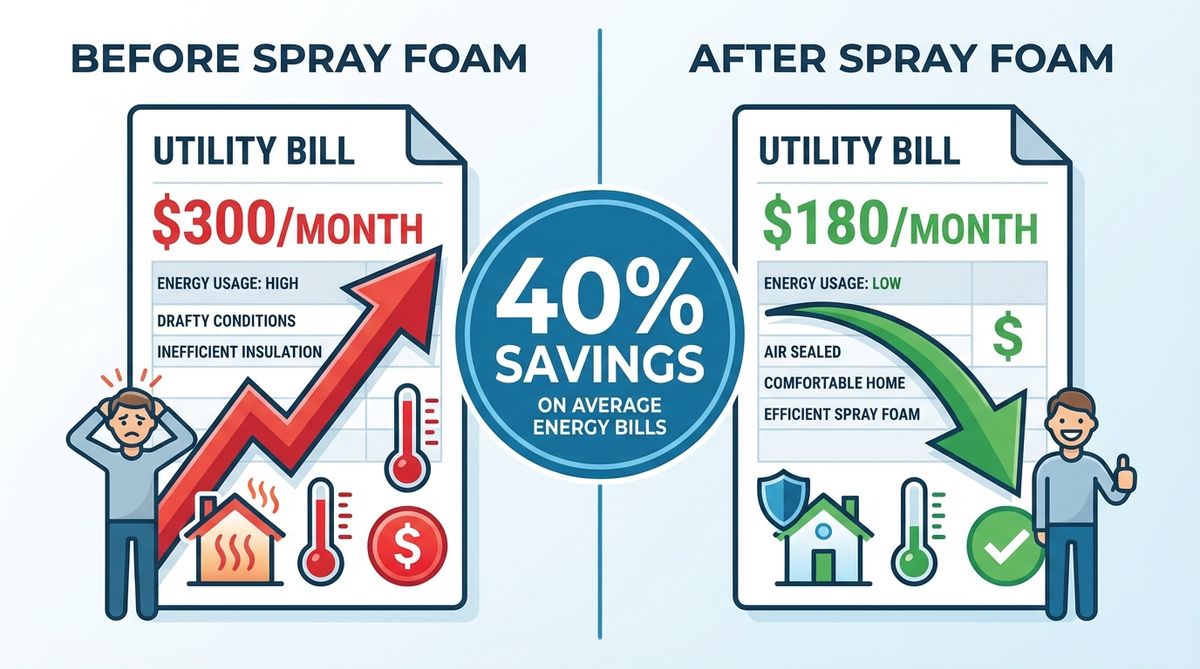
Typical homeowners save 30-50% on heating and cooling costs, translating to $300-$1,000 annual savings.
Additional Value Beyond Energy Savings
HVAC Benefits:
- Reduced cycling extends equipment life
- May allow smaller, less expensive replacement systems
- More even temperatures throughout your home
Comfort Improvements:
- Elimination of drafts and hot/cold spots
- Consistent room temperatures
- Reduced outdoor noise infiltration
Spray Foam vs Fiberglass Insulation: Which Is Better?
The spray foam vs fiberglass debate comes down to your priorities: maximum performance or minimum cost.
| Factor | Spray Foam | Fiberglass |
|---|---|---|
| R-Value per Inch | R-6 to R-7 (closed-cell) | R-2.2 to R-3.8 |
| Cost per Sq Ft | $1.50 - $4.50 | $0.10 - $0.50 |
| Air Sealing | Excellent (complete seal) | Poor (air passes through) |
| Lifespan | 80-100 years | 15-20 years |
| Moisture Resistance | Yes (closed-cell) | No (absorbs water) |
| Settling/Sagging | Never | Yes, over time |
| DIY Installation | No (professional only) | Yes (DIY-friendly) |
The Air Sealing Advantage
Here’s why spray foam outperforms fiberglass even when R-values are similar: air sealing.
According to Energy Star, as much as 40% of a building’s energy is lost due to air infiltration—air leaking through gaps, cracks, and unsealed penetrations. Fiberglass batts don’t stop air movement; air passes right through the material. Spray foam creates a complete air barrier that eliminates this energy waste.
Consumer Reports found that given equal R-values, foam insulation delivers 20-40% better overall performance than traditional fiberglass or cellulose.
7 Benefits of Spray Foam Beyond Energy Savings
While energy savings drive most spray foam decisions, the benefits extend far beyond your utility bills. View our project gallery to see the quality results you can expect.
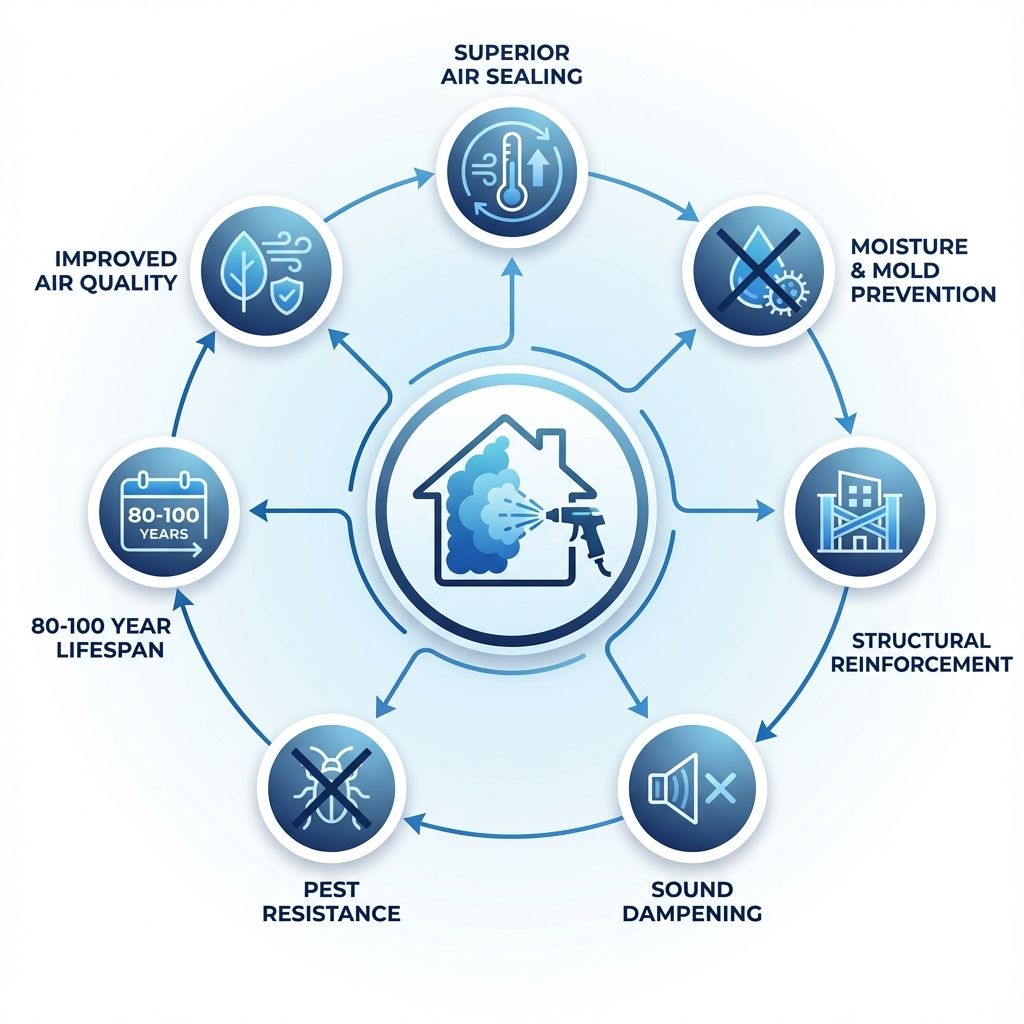
Spray foam delivers value far beyond energy savings, including moisture control, structural reinforcement, and pest resistance.
1. Superior Air Sealing
Spray foam is the only insulation that provides a true air barrier. According to ASHRAE Standard 90.1, buildings must limit air leakage to maintain energy efficiency. The 2024 NAHB New American Home using spray foam achieved a blower door test result of 0.35—an exceptional score virtually impossible with other insulation types.
2. Moisture and Mold Prevention
Closed-cell spray foam acts as a vapor barrier, preventing moisture infiltration that leads to mold growth. Building Science Corporation notes that closed-cell foam over 2” thick controls vapor diffusion in all climates.
3. Structural Reinforcement
NAHB Research demonstrates that walls installed with closed-cell spray foam have racking strength up to 300% greater than walls without foam. This added rigidity helps homes withstand severe weather, high winds, and seismic events.
4. Sound Dampening
Open-cell spray foam excels at reducing noise transmission. Its cellular structure absorbs sound waves, creating quieter living spaces—particularly valuable for bedrooms above garages, home offices, and media rooms.
5. Pest Resistance
Unlike fiberglass batting (which rodents love for nesting), spray foam doesn’t provide the soft material pests seek. The rigid barrier also eliminates entry points pests use to access your home.
6. Exceptional Longevity
Spray foam doesn’t sag, settle, or lose R-value over time. While fiberglass may need insulation removal and replacement after 15-20 years, properly installed spray foam lasts 80-100 years—essentially the lifetime of your home.
7. Improved Indoor Air Quality
By creating an air barrier, spray foam reduces infiltration of outdoor pollutants, allergens, and dust. Homes with spray foam insulation often report fewer allergy symptoms and cleaner indoor environments.
Spray Foam Disadvantages: What You Need to Know
Honest evaluation requires discussing spray foam’s drawbacks:
Higher Upfront Cost
Consumer Reports notes that installation costs 100-300% more than traditional insulation. For budget-conscious homeowners, this can be a dealbreaker.
Professional Installation Required
The EPA emphasizes that installation requires specialized equipment and certified contractors due to chemical safety concerns.
Re-Entry Time During Installation
According to EPA guidelines, safe re-entry times vary:
- One-component foam: 8-24 hours
- Two-component foam: 24-72 hours
You’ll need to vacate your home during installation and curing.
Common Problems and How to Avoid Them
Most spray foam problems stem from improper installation:
- Off-Ratio Mixing: Hire experienced contractors with properly calibrated equipment
- Improper Thickness: Multiple thin passes, not one thick application
- Moisture Trapping: Ensure surfaces are dry before application
- Persistent Odors: Verify material freshness and proper mixing
When Spray Foam May NOT Be Worth It
- Selling within 3-5 years: You may not capture the full ROI
- Very tight budget: If upfront cost creates financial strain
- Small, simple projects: Contractor minimums ($500-$700) may exceed job value
- Easy-access wall cavities: Where fiberglass works adequately
Where Should You Use Spray Foam Insulation?
Maximizing spray foam’s value means prioritizing the highest-impact applications:
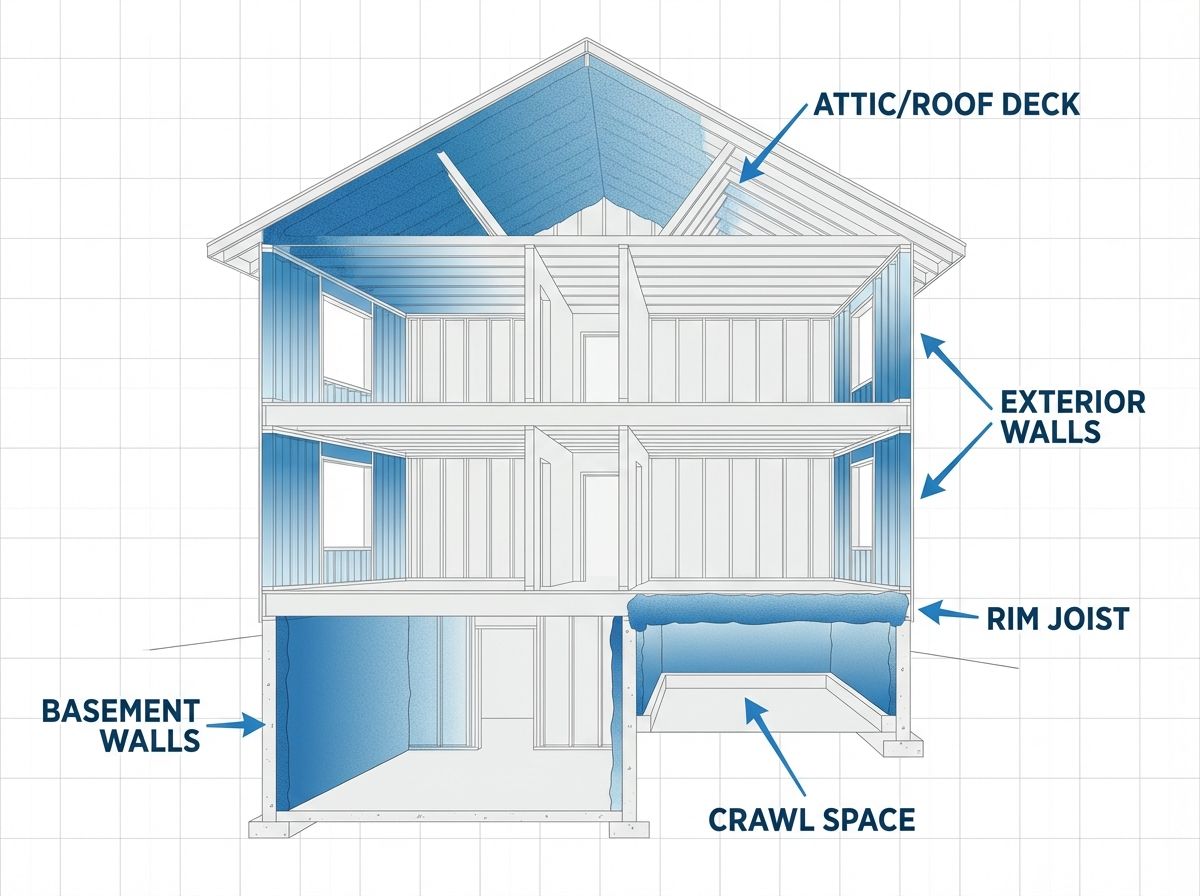
Spray foam delivers the highest ROI when applied to attics, crawl spaces, rim joists, and basement walls where moisture control and air sealing matter most.
Top 5 Spray Foam Applications (Highest ROI)
-
Attic/Roof Deck — Best Overall ROI: The attic is typically the most important insulation upgrade. Heat rises, making attics responsible for significant energy loss. Spray foam on the roof deck creates a conditioned attic space, protecting HVAC equipment and ductwork.
-
Crawl Space — Essential for Moisture Control: Crawl space encapsulation with spray foam creates a conditioned space at the same temperature as your home. Benefits include moisture/mold prevention and improved air quality.
-
Rim Joist — Major Air Leak Point: The rim joist (where floor meets foundation) is notorious for air leakage. Spray foam here delivers outsized benefits for relatively low cost.
-
Basement Walls — Dual Benefits: Basement spray foam provides both insulation and moisture control. Closed-cell foam is essential here to prevent moisture infiltration.
-
New Construction Walls — Maximum Access: In new construction, spray foam can be applied before drywall installation, providing optimal coverage with easier access.
How to Choose a Spray Foam Contractor
The quality of your spray foam installation depends entirely on your contractor. Proper installation is the difference between decades of savings and expensive remediation. Learn more about our company and our commitment to quality.
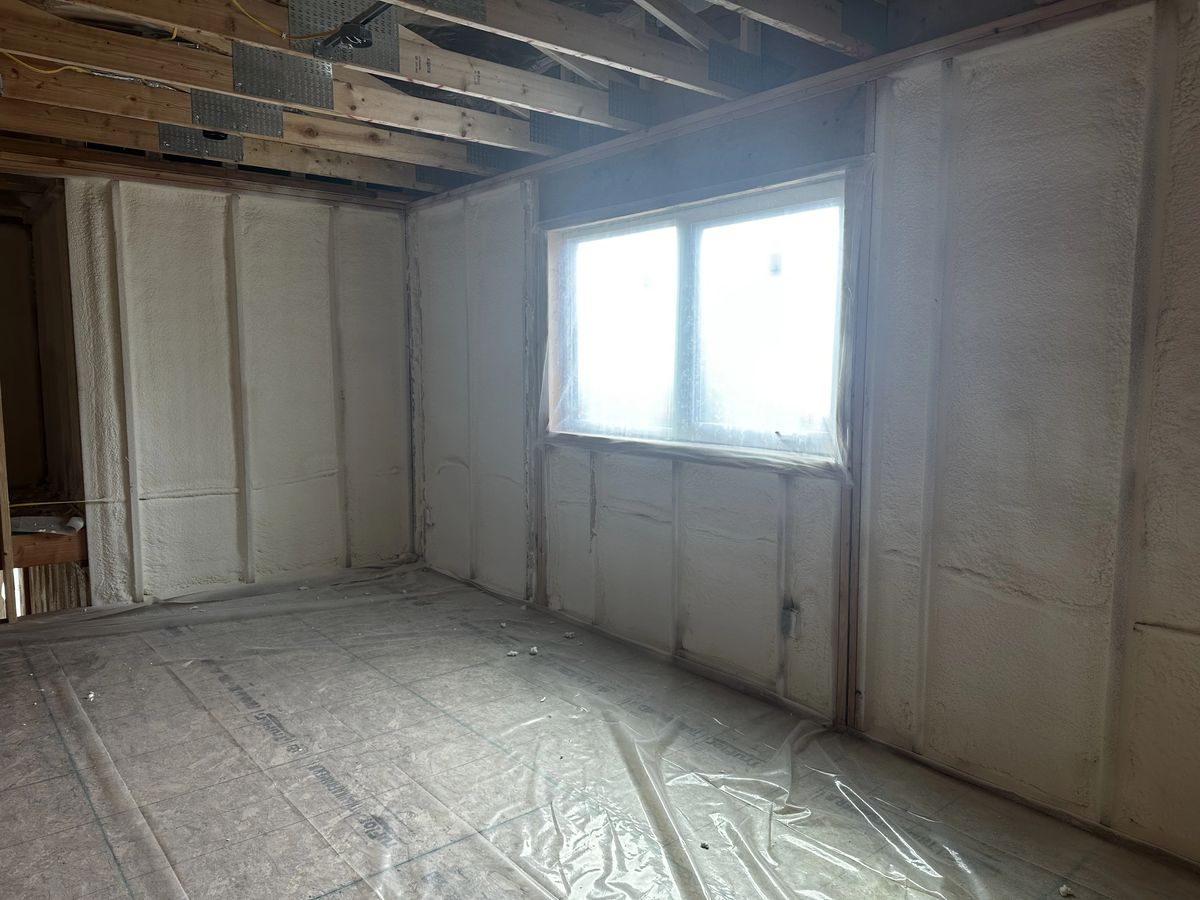
Professional installation with certified contractors ensures proper mixing ratios, safety protocols, and optimal performance for decades of reliable service.
Contractor Selection Checklist
- Licensed and insured — Verify current status
- SPFA Professional Certification — Industry standard
- 5+ years experience — Spray foam requires skill
- Written warranty — Both workmanship and materials
- Recent references — Call references from similar projects
- Detailed written estimate — Itemized costs, not lump sum
- Clear communication — Explains process and re-entry times
- Properly calibrated equipment — Ask about maintenance
Remember: spray foam problems are expensive to fix. Removal and reinstallation can cost more than the original installation. Investing in a quality contractor protects your investment. Consider a thermal inspection after installation to verify quality.
Frequently Asked Questions
How much does spray foam insulation cost per square foot?
Spray foam insulation costs $1.00-$4.50 per square foot installed, depending on foam type. Open-cell ranges from $1.00-$3.00, while closed-cell costs $1.50-$4.50 per square foot. The average whole-house project runs $2,000-$8,000.
Is spray foam insulation worth the extra cost?
Yes, for most homeowners who plan to stay 5+ years. Spray foam pays for itself in 3-7 years through 30-50% energy savings and lasts 80-100 years. The higher upfront cost delivers dramatically better performance, including complete air sealing that fiberglass can’t provide.
How long does spray foam insulation last?
Spray foam insulation lasts 80-100 years—essentially the lifetime of your home. Unlike fiberglass (15-20 years) or cellulose (20-30 years), spray foam doesn’t sag, settle, or lose R-value over time.
Is spray foam insulation safe?
Yes, spray foam is completely safe once fully cured (24-72 hours after installation). During installation, chemical exposure risks exist, which is why professional installation and temporary evacuation are required. After curing, the foam becomes inert.
Does spray foam insulation increase home value?
Spray foam doesn’t directly increase appraised home value, but it makes homes more attractive to buyers through energy efficiency and comfort. Homes with lower energy bills often sell faster and may command higher prices.
Open cell vs closed cell: which should I choose?
Choose closed-cell foam for attics, crawl spaces, basements, and anywhere moisture control matters. Its higher R-value (R-6-7/inch) and vapor barrier properties make it ideal. Choose open-cell foam for interior walls and soundproofing where cost savings are important.
Can I install spray foam insulation myself?
For small projects (gaps around windows, rim joists), DIY spray foam kits work adequately. For whole-house insulation, professional installation is essential due to specialized equipment and safety requirements.
How much can I save on energy bills with spray foam?
Homeowners typically save 30-50% on heating and cooling costs. For a home spending $2,000+ annually on energy, that’s $600-$1,000 in annual savings. Over 10 years, savings typically reach $6,000-$10,000.
Does spray foam prevent mold?
Closed-cell spray foam helps prevent mold by creating a vapor barrier that blocks moisture infiltration. However, spray foam must be installed on dry surfaces—spraying over existing moisture can trap it behind the foam.
How long should I stay out of the house after installation?
Stay out for 24-72 hours after spray foam installation, depending on foam type. One-component foam typically requires 8-24 hours; two-component foam (most professional installations) requires 24-72 hours.
The Bottom Line: Is Spray Foam Worth the Cost?
After examining the costs, ROI, benefits, and potential drawbacks, here’s the conclusion: spray foam insulation is worth the cost for most homeowners who plan to stay in their homes for 5+ years.
The Value Equation
- Investment: $2,000-$8,000 for typical projects
- Annual savings: $300-$1,000 on energy bills
- Payback period: 3-7 years
- Lifespan: 80-100 years
- Net lifetime savings: $15,000-$50,000+
Beyond the financial return, spray foam delivers benefits that traditional insulation simply can’t match: complete air sealing, moisture control, structural reinforcement, soundproofing, and pest resistance. Once installed, it maintains full effectiveness for generations.
Ready to Learn More?
If spray foam insulation sounds right for your home, the next step is getting a professional assessment. A qualified contractor can evaluate your specific situation, recommend the right foam type, and provide an accurate estimate based on your home’s needs. Contact our building consultant services for expert guidance.
Get a Free Spray Foam Assessment
Find out if spray foam is right for your home. Our experts will evaluate your situation and provide an honest recommendation.
This article provides general information about spray foam insulation. Costs and savings vary based on location, home size, climate, and installation specifics. Consult with a qualified contractor for accurate estimates for your situation.
Last updated: December 20, 2025